
Oval vs Oblong Face Shape: How to Tell the Difference
An oval face is about 1.5× longer than it is wide and tapers gently from cheekbones to a rounded chin. An oblong face is longer, about 1.7× or more, with straighter sides and less taper. If your face looks long and the sides run fairly parallel, you're oblong.
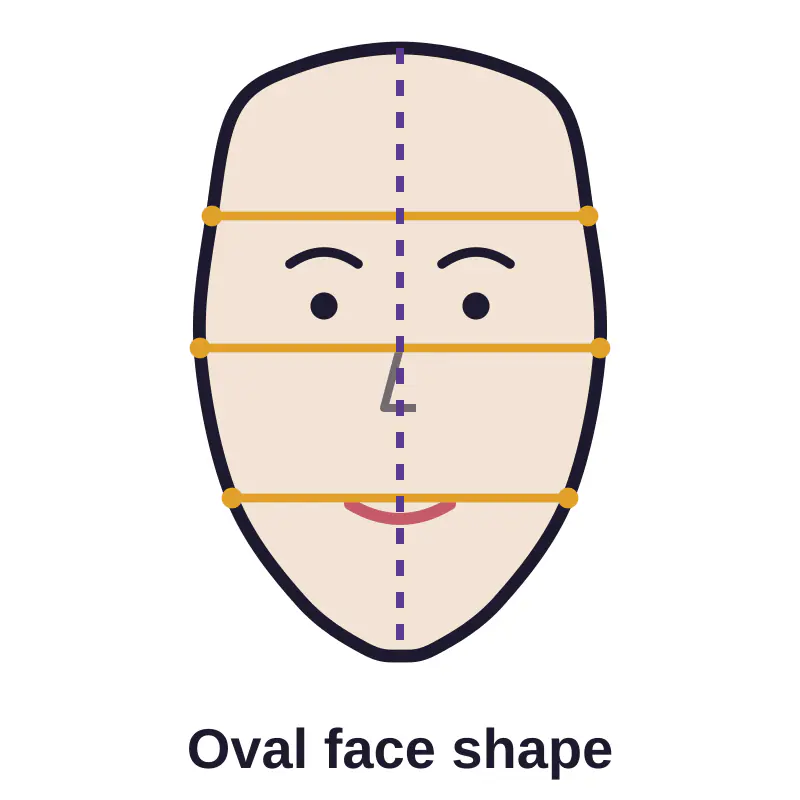
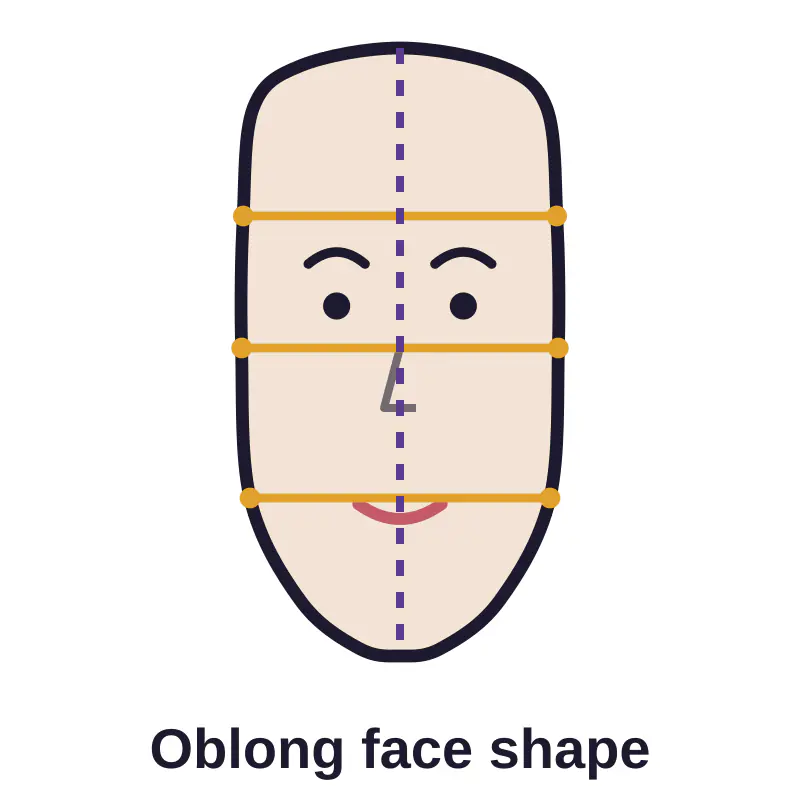
Quick comparison
| Oval | Oblong | |
|---|---|---|
| Length vs width | ~1.5× | ~1.7×+ |
| Widest point | Cheekbones | Even |
| Sides | Curve inward toward the chin | Fairly straight |
| Forehead | Slightly wider than jaw | Similar to jaw, often tall |
The 30-second test
- Pull your hair back and look straight into a mirror.
- Hold a ruler or your phone horizontally across your cheekbones and note the width.
- Compare with the length from hairline to chin.
- If length ÷ width is about 1.5, you're oval. If it's 1.7 or more, oblong.
- Then check the sides: if they taper noticeably toward your chin, you're oval.
Or let the face shape detector do the measuring.
Does it matter?
Yes, a little. Oval faces suit almost anything, including height on top. Oblong faces look best with width at the sides and less height. If you're borderline, follow oblong advice when a style makes you look long.
Frequently asked questions
Is oblong the same as oval?
No. Oblong is longer with straighter sides; oval is shorter and tapers toward a rounded chin.
Which is more attractive, oval or oblong?
Neither. Both are common among models and actors.
Keep reading
Tried it? Tell us how it went
We read every message and use your feedback to make the detector more accurate. Share your result, a suggestion or a bug.