
Types of Eye Shapes
There are ten commonly described eye shapes: almond, round, hooded, monolid, upturned, downturned, deep-set, protruding, close-set and wide-set. Most people combine two traits, such as almond and hooded, or round and wide-set. Your eye shape is defined by three things: how open the eye is, which way the outer corner tilts, and how much eyelid shows above the lash line.
Find yours with the eye shape detector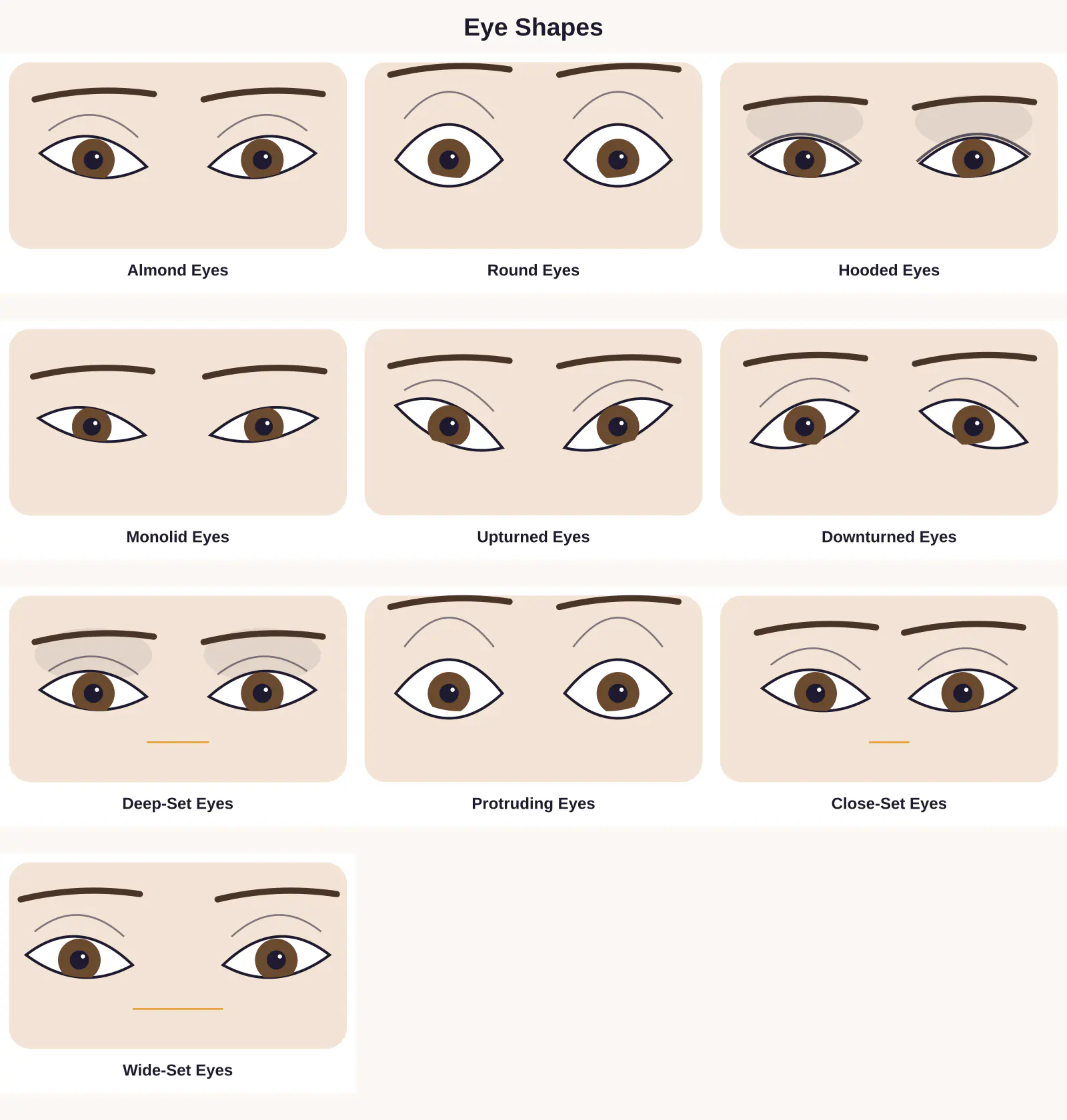
All eye shapes at a glance
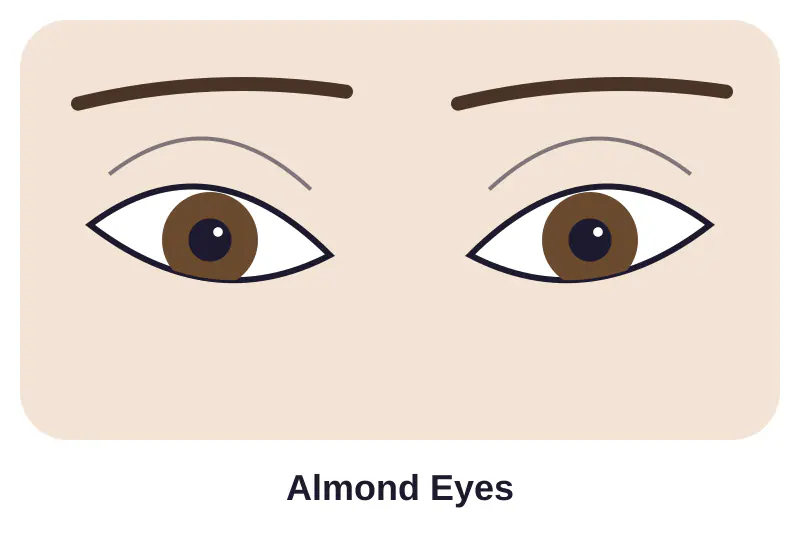 Almond EyesAlmond eyes are wider than they are tall, with a visible crease and corners that taper to a gentle point, like an almond.Read more
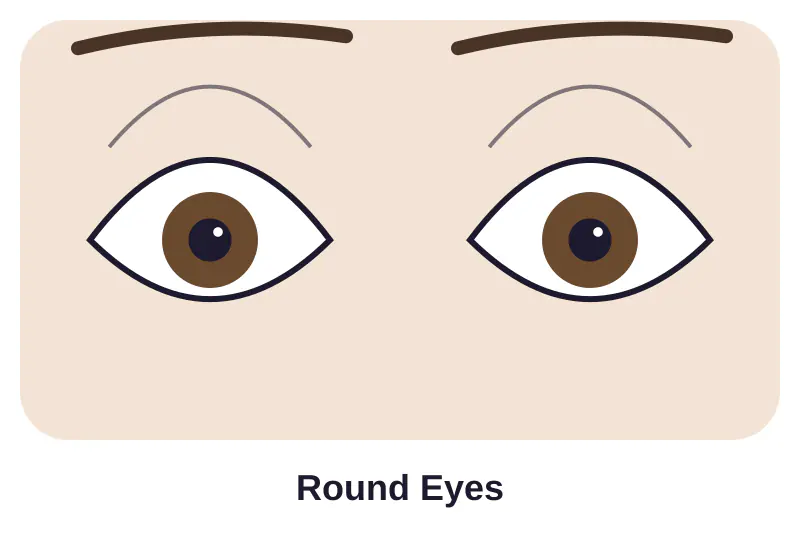 Round EyesRound eyes are taller than average relative to their width, so they look large and open.Read more
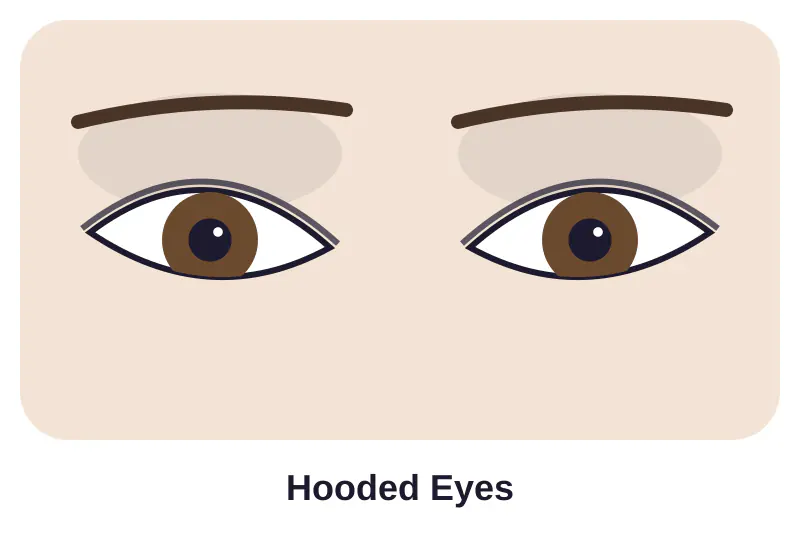 Hooded EyesHooded eyes have an extra layer of skin that folds down from the brow bone and covers the crease, so the upper eyelid looks small or hidden when the eyes are open..Read more
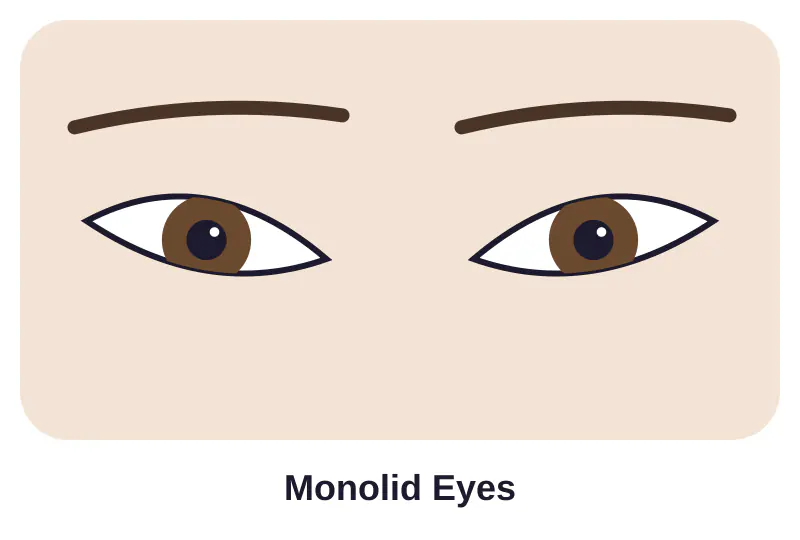 Monolid EyesMonolid eyes have no visible crease on the upper eyelid, so the lid appears as one smooth surface from lashes to brow.Read more
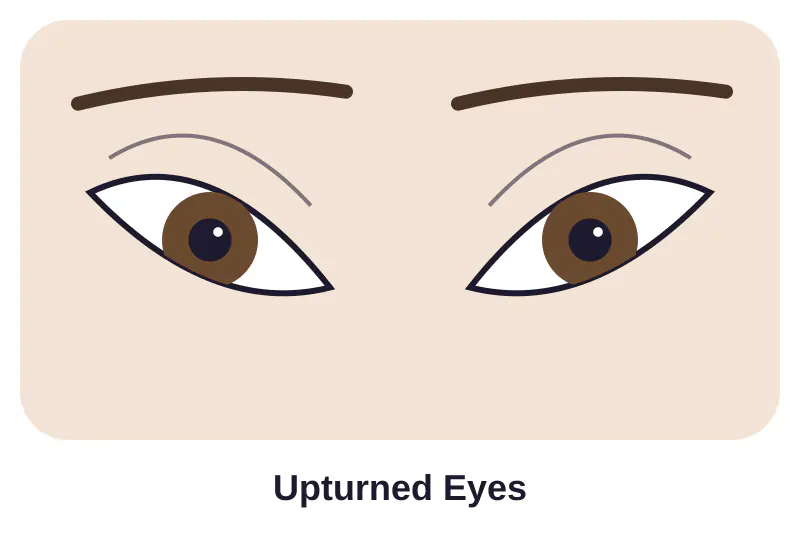 Upturned EyesUpturned eyes have outer corners that sit higher than the inner corners, giving a lifted, cat-like look.Read more
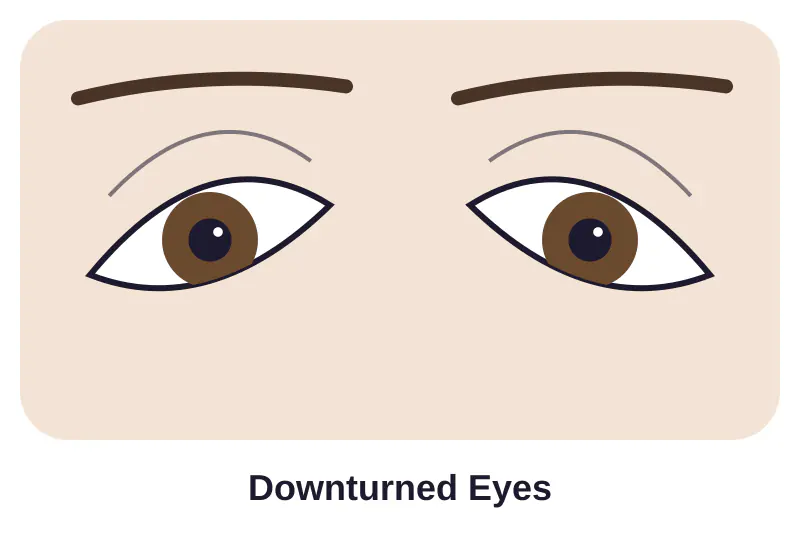 Downturned EyesDownturned eyes have outer corners that sit lower than the inner corners.Read more
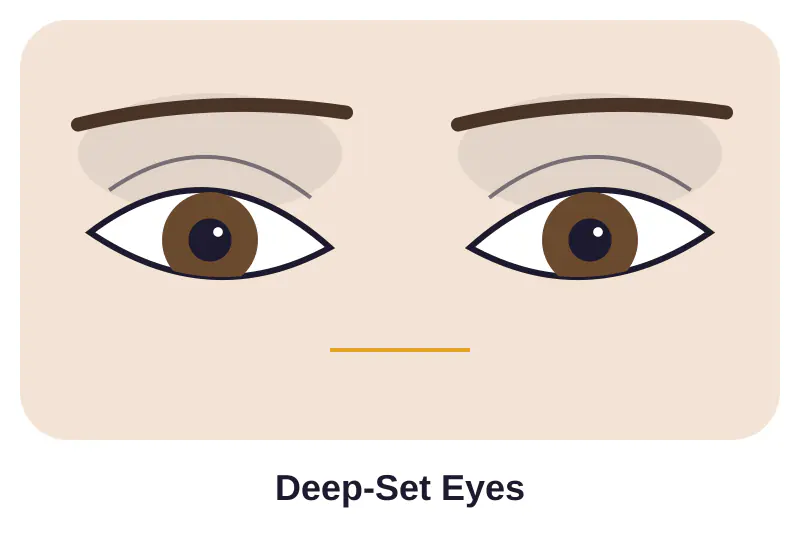 Deep-Set EyesDeep-set eyes sit further back in the skull, so the brow bone looks more prominent and casts a shadow over the lid.Read more
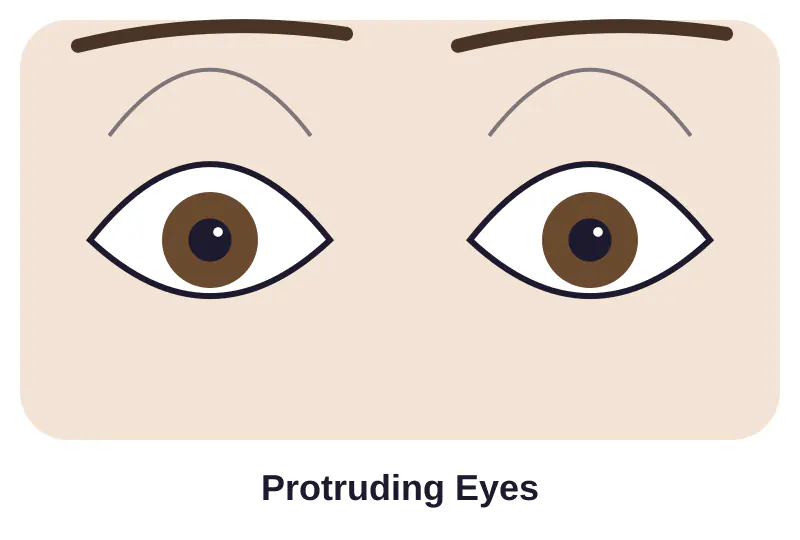 Protruding EyesProtruding (or prominent) eyes sit further forward, so a lot of eyelid is visible and the eyes look large and open.Read more
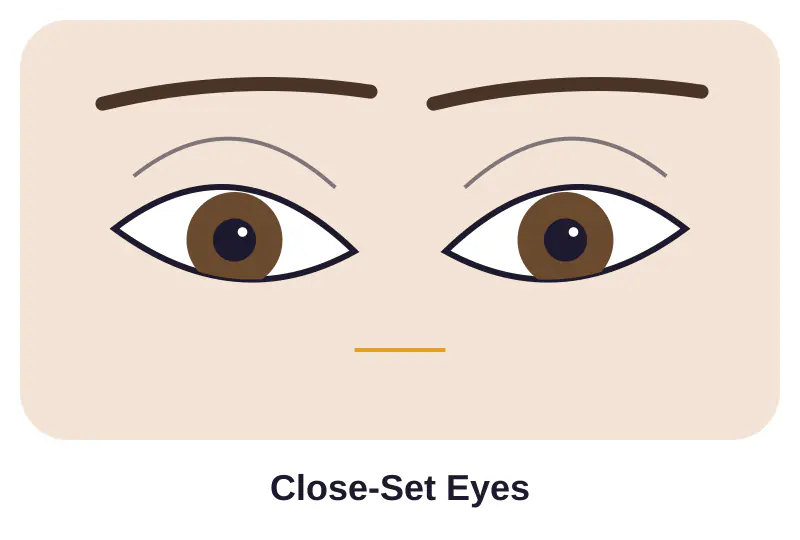 Close-Set EyesClose-set eyes have a gap between them that's narrower than the width of one eye.Read more
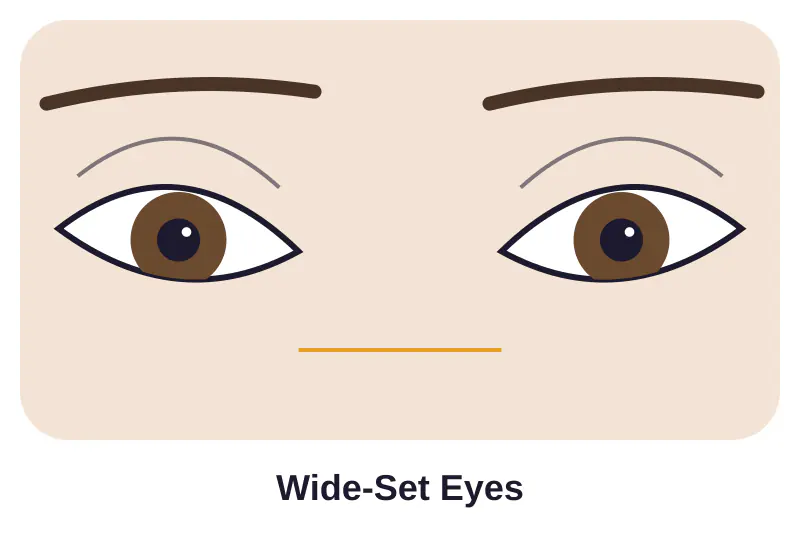 Wide-Set EyesWide-set eyes have a gap between them that's wider than the width of one eye.Read more
How to tell your eye shape
- Look straight into a mirror with a relaxed face, in even light.
- Check the crease. Can you see a crease on your upper lid? If not, you may have monolid eyes. If the crease is hidden by skin falling over it, your eyes are hooded.
- Check the white. If white shows above or below the iris when you look straight ahead, your eyes are likely round. If the iris touches both lids, they're likely almond.
- Check the tilt. Imagine a line through both corners of each eye. If the outer corner is higher, your eyes are upturned; if lower, downturned.
- Check the spacing. If the gap between your eyes is wider than one eye width, they're wide-set; if narrower, close-set.
Or use our eye shape detector, which measures all of this from a photo.
Canthal tilt and eye shape
Canthal tilt is the angle between the inner and outer corners of the eye. A positive tilt (outer corner higher) is what makes eyes look upturned or "cat-like". Measure yours with the canthal tilt calculator.
Almond Eyes
Almond eyes are wider than they are tall, with a visible crease and corners that taper to a gentle point, like an almond. The iris touches both the upper and lower lids, so little white shows above or below it.
- Longer than tall
- Slightly upturned outer corners
- Visible crease
- Iris touches both lids
Round Eyes
Round eyes are taller than average relative to their width, so they look large and open. White is often visible above or below the iris, and the crease is clearly visible.
- Large, open look
- White visible above or below the iris
- Defined crease
Hooded Eyes
Hooded eyes have an extra layer of skin that folds down from the brow bone and covers the crease, so the upper eyelid looks small or hidden when the eyes are open.
- Crease hidden by skin
- Little visible lid space
- Brow bone appears close to lashes
Monolid Eyes
Monolid eyes have no visible crease on the upper eyelid, so the lid appears as one smooth surface from lashes to brow. Monolids are especially common in people of East Asian descent.
- No visible crease
- Smooth upper lid
- Often slightly upturned
Upturned Eyes
Upturned eyes have outer corners that sit higher than the inner corners, giving a lifted, cat-like look. In measurement terms, they have a positive canthal tilt.
- Outer corner higher than inner corner
- Positive canthal tilt
- Lifted look
Downturned Eyes
Downturned eyes have outer corners that sit lower than the inner corners. This gives a soft, gentle look and corresponds to a neutral or negative canthal tilt.
- Outer corners lower than inner corners
- Soft expression
- Negative canthal tilt
Deep-Set Eyes
Deep-set eyes sit further back in the skull, so the brow bone looks more prominent and casts a shadow over the lid. They often look larger in profile than straight on.
- Prominent brow bone
- Shadowed lids
- Eyes sit back from the face
Protruding Eyes
Protruding (or prominent) eyes sit further forward, so a lot of eyelid is visible and the eyes look large and open. Sudden changes in eye prominence can be a medical sign, so speak to a doctor if yours change.
- Large visible lid
- Eyes sit forward
- Open look
Close-Set Eyes
Close-set eyes have a gap between them that's narrower than the width of one eye. The rule of fifths says the ideal gap is about one eye width.
- Gap between eyes less than one eye width
- Eyes appear closer to the nose
Wide-Set Eyes
Wide-set eyes have a gap between them that's wider than the width of one eye. They're often associated with a youthful, open look.
- Gap between eyes more than one eye width
- Open, youthful look
Frequently asked questions
What are the main types of eyes?
Almond, round, hooded, monolid, upturned, downturned, deep-set, protruding, close-set and wide-set. Most people combine two of these.
What is the most common eye shape?
Almond and brown-eyed almond shapes are often described as the most common, followed by hooded and round.
What is the rarest eye shape?
There's no reliable data on eye shape frequency. Eye shape varies widely by ancestry, and most people are a mix of shapes.
Can my eye shape change?
Eye shape changes gradually with age, mostly as skin loses elasticity and eyes become more hooded.