
Types of Nose Shapes
The most commonly described nose shapes are Greek (straight), Roman, Nubian, hawk (aquiline), button, snub, celestial (upturned), fleshy and bumpy. Nose shape comes down to four things: width at the nostrils, length from the bridge to the base, the profile of the bridge (straight, humped or scooped), and the angle of the tip.
Find yours with the nose shape detector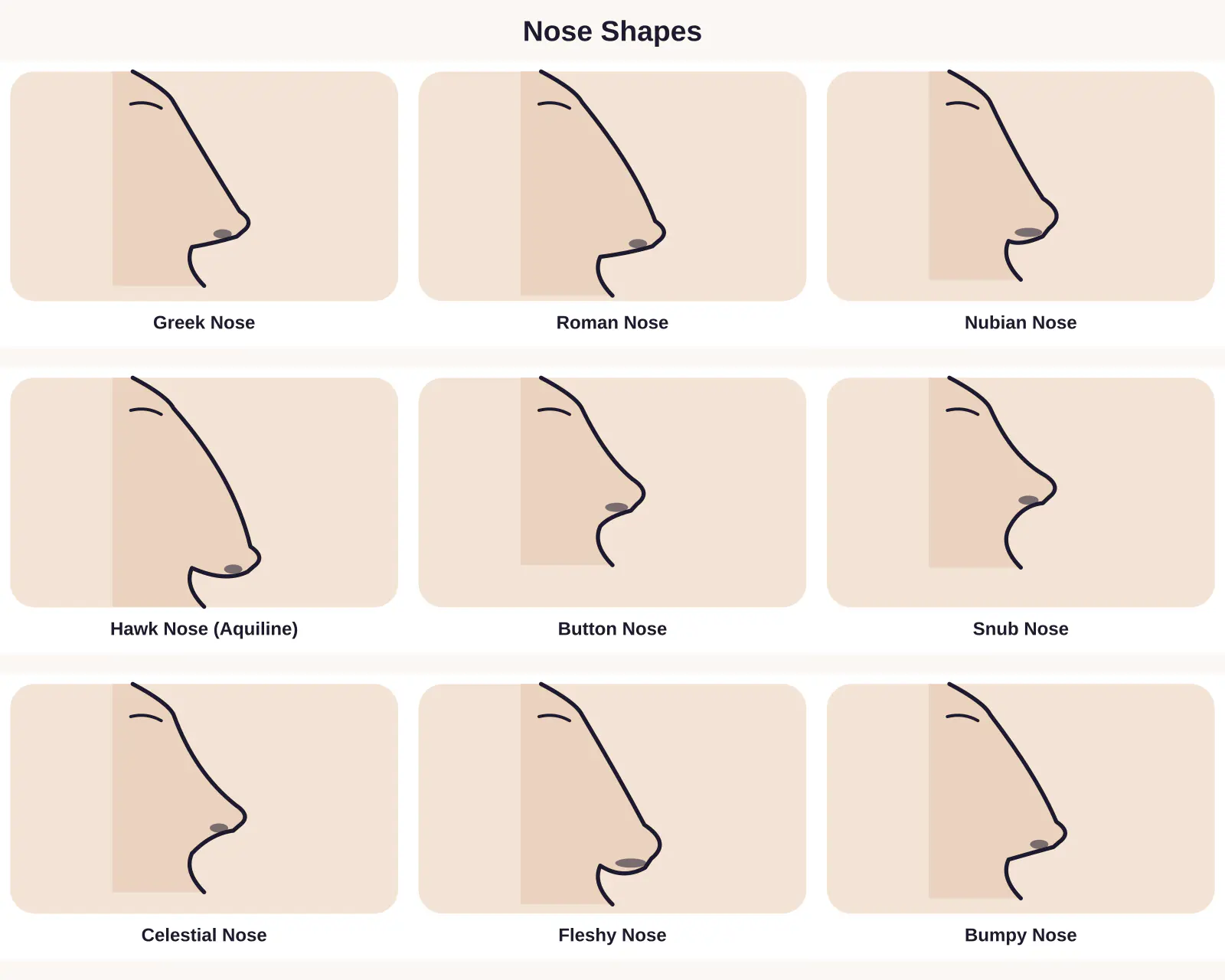
All nose shapes at a glance
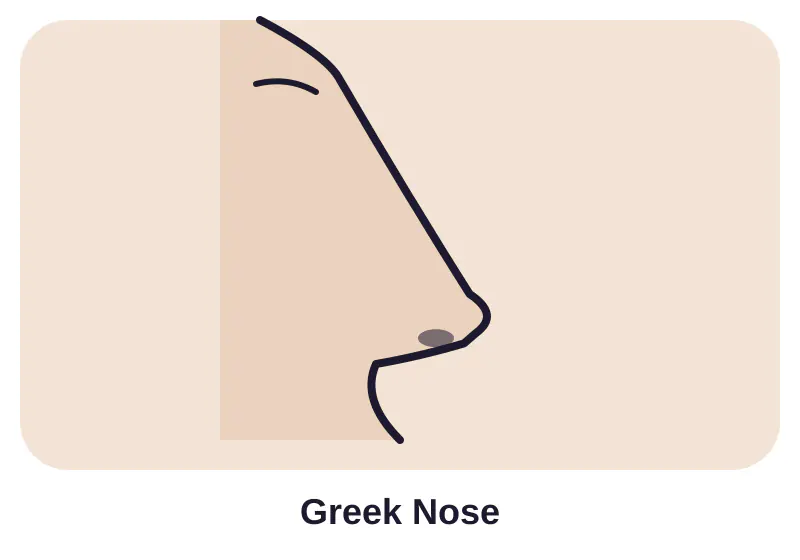 Greek NoseA Greek nose has a straight bridge with no hump or dip, running in a clean line from the forehead to the tip.Read more
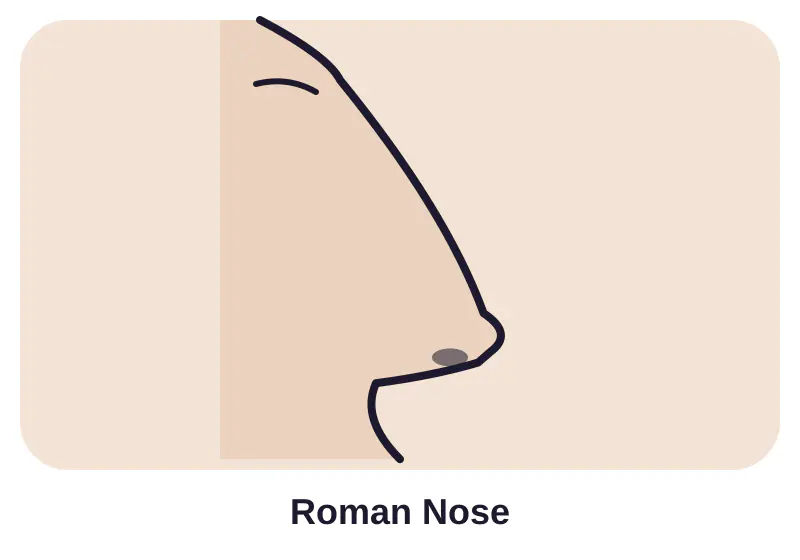 Roman NoseA Roman nose has a prominent bridge that curves outward, often with a slight bump, giving a strong profile.Read more
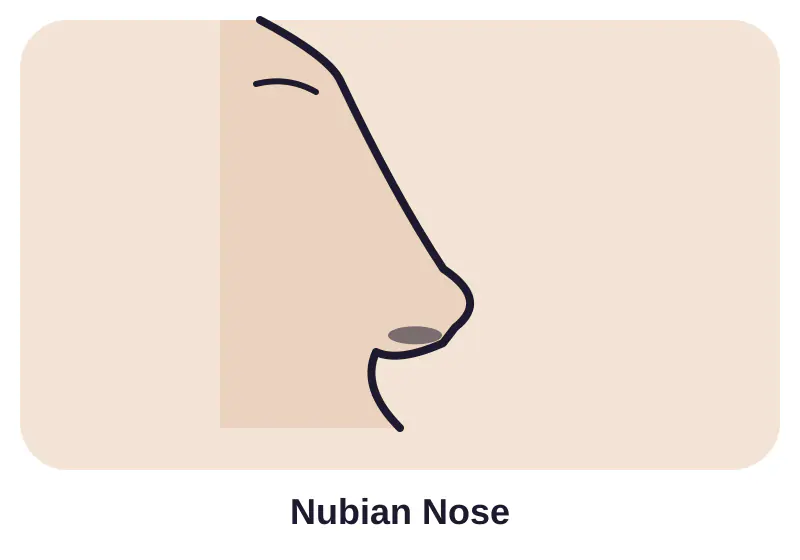 Nubian NoseA Nubian nose has a long, fairly low bridge and a wider base at the nostrils.Read more
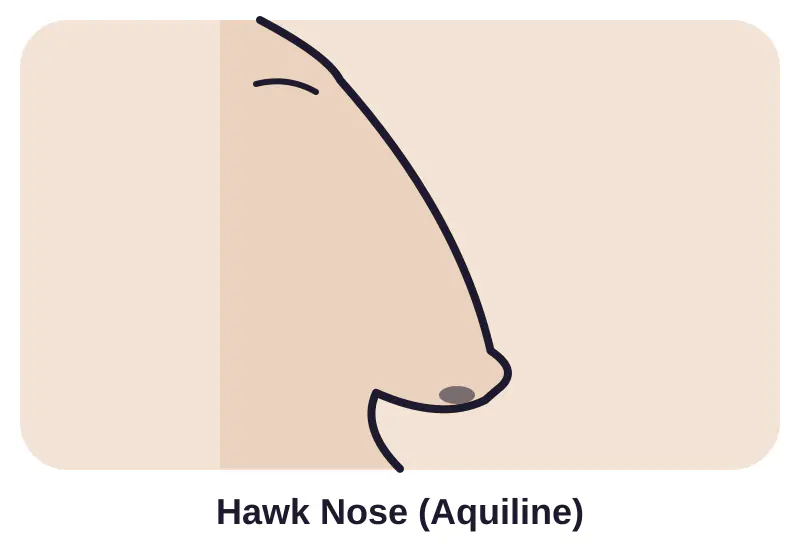 Hawk Nose (Aquiline)A hawk nose, also called an aquiline nose, has a prominent bridge with a strong curve and a tip that points downward, like a hawk's beak..Read more
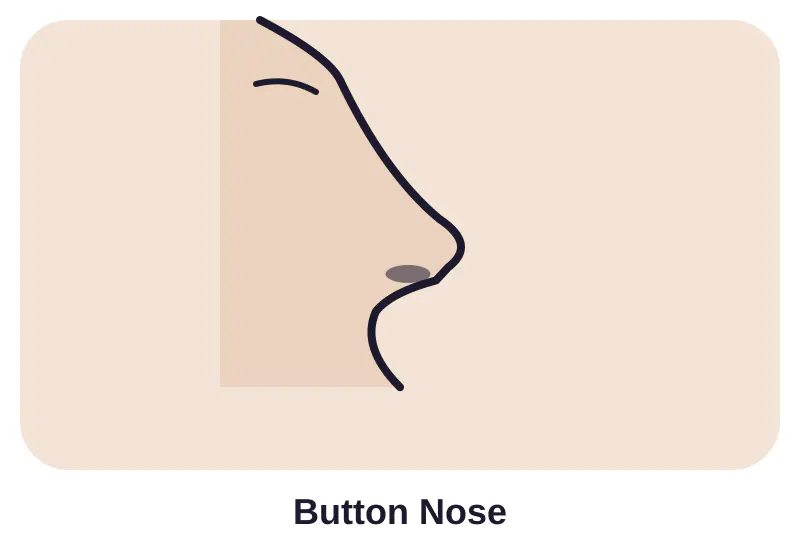 Button NoseA button nose is small, short and rounded, with a slightly upturned tip.Read more
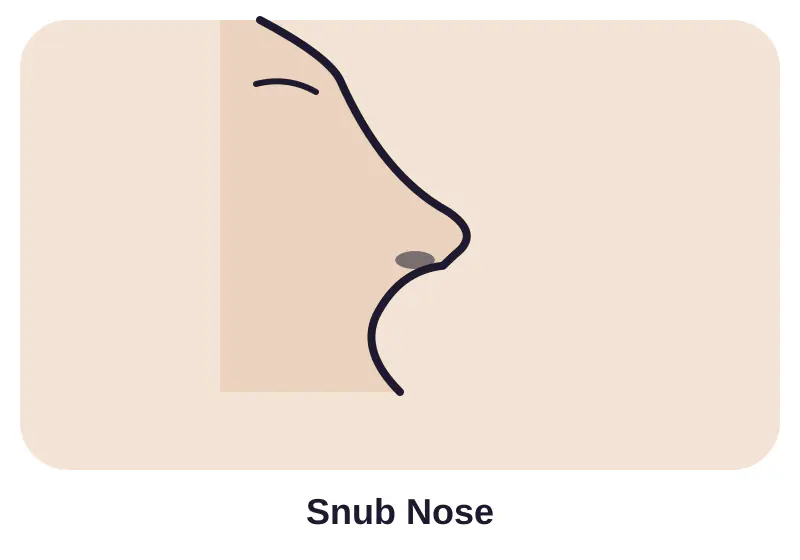 Snub NoseA snub nose is short and clearly upturned, so the nostrils are visible when you look at the face straight on..Read more
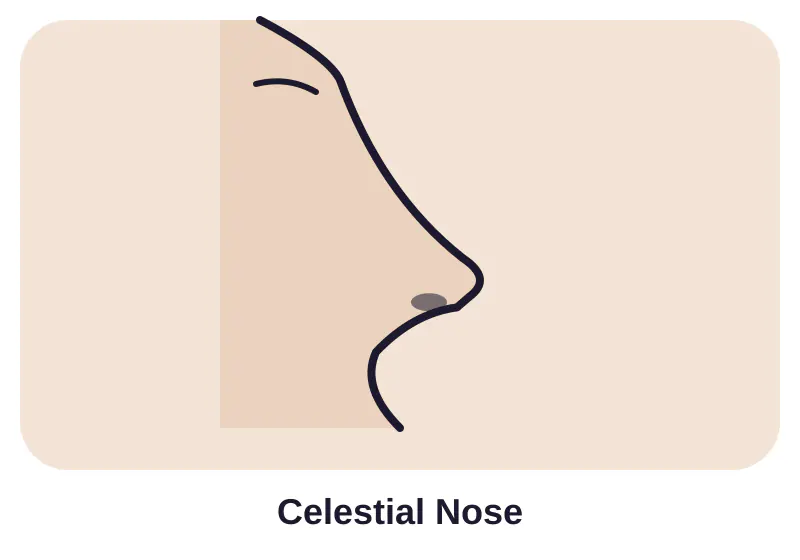 Celestial NoseA celestial nose (also called an upturned nose) has a small dip in the middle of the bridge and a tip that points upward.Read more
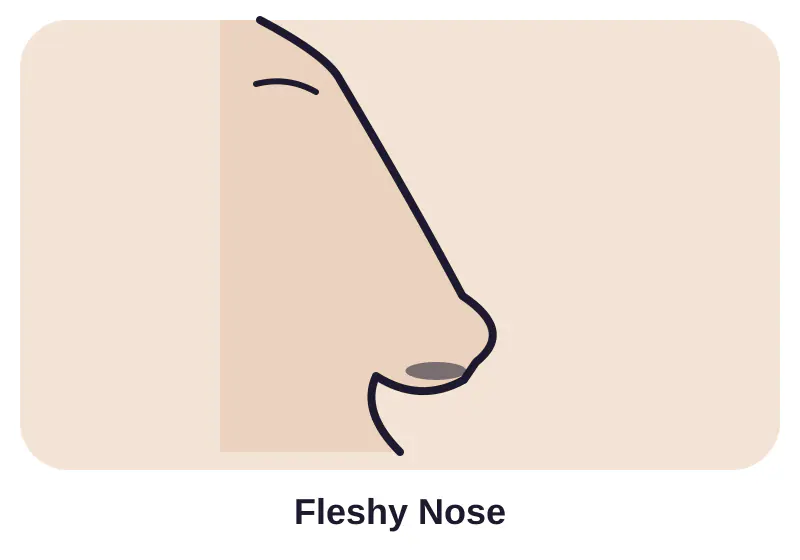 Fleshy NoseA fleshy nose is large and wide with a rounded, prominent tip.Read more
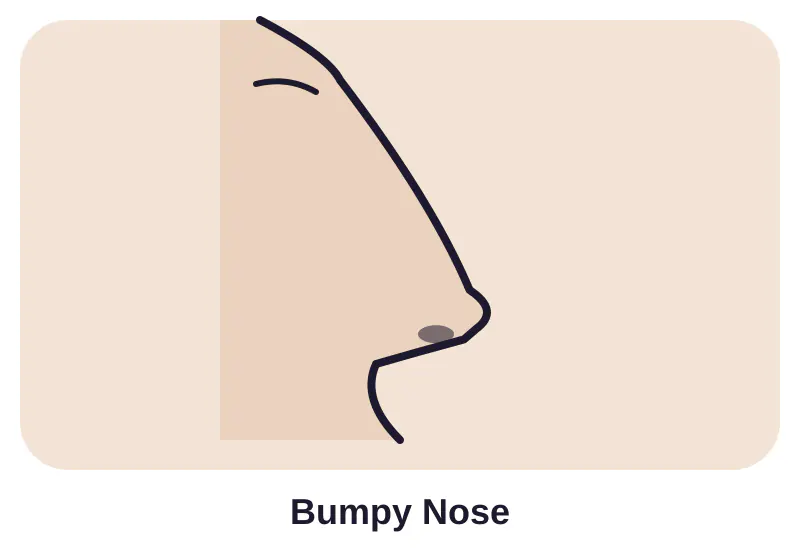 Bumpy NoseA bumpy nose has a visible bump, or dorsal hump, on the bridge.Read more
How to tell your nose shape
- Width: compare the width of your nostrils to the gap between your inner eye corners. Wider suggests Nubian or fleshy; narrower suggests Greek or button.
- Length: a short nose (less than about a third of the face) suggests button or snub.
- Bridge: check your profile in a side mirror. A visible hump suggests Roman or hawk.
- Tip: if your nostrils are visible straight on, your tip is upturned (snub or celestial). A tip that points down suggests hawk.
Our nose shape detector estimates width, length and tip angle from a front photo. Bridge profile is best judged from the side.
Nose shape and ancestry
Nose shape is strongly influenced by ancestry and climate. Names like "Greek", "Roman" and "Nubian" are historical labels, not ethnic categories; people of every background have every shape.
Greek Nose
A Greek nose has a straight bridge with no hump or dip, running in a clean line from the forehead to the tip. It's usually narrow to medium in width.
- Straight bridge
- No hump
- Narrow to medium width
- Straight tip
Roman Nose
A Roman nose has a prominent bridge that curves outward, often with a slight bump, giving a strong profile. It's sometimes called aquiline, though aquiline usually implies a more pronounced, hooked curve.
- Prominent, outward-curving bridge
- Strong profile
- Usually longer than average
Nubian Nose
A Nubian nose has a long, fairly low bridge and a wider base at the nostrils. It's common among people of African descent but appears in all populations.
- Wide base
- Long bridge
- Rounded nostrils
Hawk Nose (Aquiline)
A hawk nose, also called an aquiline nose, has a prominent bridge with a strong curve and a tip that points downward, like a hawk's beak.
- Pronounced curve
- Downward-pointing tip
- Prominent bridge
Button Nose
A button nose is small, short and rounded, with a slightly upturned tip. It's often associated with a youthful look.
- Small
- Short
- Rounded tip
- Slightly upturned
Snub Nose
A snub nose is short and clearly upturned, so the nostrils are visible when you look at the face straight on.
- Short
- Strongly upturned
- Visible nostrils
Celestial Nose
A celestial nose (also called an upturned nose) has a small dip in the middle of the bridge and a tip that points upward. It's longer than a snub nose.
- Slight dip in the bridge
- Upturned tip
- Medium length
Fleshy Nose
A fleshy nose is large and wide with a rounded, prominent tip. It's one of the most common nose shapes.
- Large
- Wide
- Rounded, bulbous tip
Bumpy Nose
A bumpy nose has a visible bump, or dorsal hump, on the bridge. It's very common and can be natural or the result of an injury.
- Visible hump on the bridge
- Profile shows a curve
Frequently asked questions
What are the main types of nose shapes?
Greek, Roman, Nubian, hawk (aquiline), button, snub, celestial, fleshy and bumpy.
What is the most common nose shape?
Fleshy noses are often described as the most common, followed by straight (Greek) noses.
Can a photo show my nose shape?
A front photo shows width, length and tip angle well. Bridge humps are best seen in profile.